- Home /
- Cost Guides /
- Walk-In Shower Cost WNC
walk-in shower cost WNC
Three very different builds share the name "walk-in shower" in WNC — a prefab kit, a custom-tiled shower, and a curbless zero-entry design — and your shower type, tile, and entry decide where the number lands.
What it costs by shower type
| Shower type | What you get | Installed cost |
|---|---|---|
| Prefab / acrylic kit | One-piece acrylic or fiberglass, stock sizes, fastest install | $1,000 to $8,000 |
| Standard walk-in (all types) | Typical 32x60 curbed shower, mixed prefab-to-tile finishes | $3,500 to $15,000 |
| Custom tile + frameless glass | Mortar or Schluter pan, porcelain or stone tile, frameless glass | $3,500 to $15,000 |
| Curbless / zero-entry | Recessed subfloor, linear drain, step-free accessible entry | $12,000 to $17,000 |
Sources: Angi / HomeGuide — Walk-In Shower Cost (2026); Angi / HomeGuide — Walk-In Shower Cost (2026); Angi / This Old House — Walk-In Shower Cost (2026). Ranges are published third-party figures, not Pisgah quotes — a typical custom-tile WNC shower lands near $9,000 and a curbless build near $14,000. WNC labor runs modestly below large-metro national averages, so real local projects tend toward the lower-to-middle of each band.
"How much does a walk-in shower cost?" doesn't have one answer in Western North Carolina, because three very different builds all carry the same name. A drop-in prefab kit, a fully tiled shower with frameless glass, and a curbless zero-entry design can span $1,000 to $17,000 — a 17x swing for what a homeowner pictures as the same room. The honest way to price it is to pick your shower type first, then layer on the two things that actually move the number: your tile choice and whether you go curbless. Get those three right and you can predict your budget within a few thousand dollars before anyone walks through your door. Here's how each one works in the WNC market.
Shower type sets the floor
The single biggest fork is prefab versus tile. A one-piece acrylic or fiberglass kit is the lowest-cost route at $1,000 to $8,000 installed — most WNC installs land near $3,500 — because there's no tile to set and no shower pan to build, so labor is a small share and the unit often goes in within a day or two. The trade-off is stock sizes, limited colors and visible seams. Step up to a custom-tiled shower and you're at $3,500 to $15,000, with mid-range WNC jobs commonly landing $8,000-$10,000. A standard 32x60 walk-in across all finish types runs $3,500 to $15,000, with most basic builds in the $6,000-$12,000 band. The top of the range is a curbless build, covered below.
Tile is where the range really lives
Two identically sized showers can differ by thousands purely on tile. Material alone runs $2-$15/sq ft: porcelain sits at the low end, while natural stone, glass mosaic and large-format slabs climb far higher and take longer to set. Then there's the labor most homeowners never see priced — the waterproofing. A real tiled shower needs either a built mortar pan or a Schluter membrane system behind the tile, and a tile setter typically works 3-5 days because thinset, grout and shower-pan mortar each have to cure before the next step. Frameless glass is its own four-figure line item versus a framed door or a simple curtain. None of these are right or wrong — they're just where your custom-tile number lands inside that $3,500 to $15,000 band.
Curbless is the premium that buys accessibility
A curbless, or zero-entry, shower is the priciest type for a concrete structural reason: the subfloor has to be recessed so water drains away without a threshold to step over. That means cutting and re-framing floor joists, building a sloped mortar bed (or a pre-sloped tray) with a linear or center drain, and adding an extra waterproofing layer — all skilled labor. Expect curbless to add 20-30% over a comparable curbed shower, a $3,000-$8,000 premium in WNC, with full installs commonly landing $12,000 to $17,000. The payoff is real: a step-free entry is the centerpiece of an accessible, aging-in-place bath and reads larger in a small room. We break down the full aging-in-place scope on our walk-in tubs & accessible bathrooms page.
Labor, footprint and the tub-to-shower angle
Like the rest of the bathroom, a shower is labor-dense — on a tiled build, labor runs roughly 40-60% of the total once you count the plumber, tile setter, waterproofing and glass install. The cheapest way to add a walk-in shower is usually to reuse the existing footprint and plumbing. A tub-to-shower conversion that keeps the water and waste lines where they are starts near $1,500 for an acrylic system and runs $3,000-$8,000 for most WNC jobs, because you skip the most expensive line item in any bathroom: relocating plumbing. The common play is to convert a guest bath to a shower while leaving at least one tub elsewhere for resale — buyers still expect a tub somewhere in the home.
Permits, licensing and the WNC adjustment
If your shower build moves or adds plumbing, electrical or walls, you'll need a permit — and you want one, because the inspection is what protects you on waterproofing and rough-in you can't see after the tile goes up. A like-for-like prefab swap in the same spot sometimes doesn't trigger one, but anything structural or mechanical does. Verify the threshold for your county directly with Buncombe County Permits or Henderson County Building Services, and always confirm a contractor's license is active through the NC Licensing Board for General Contractors before you sign — it's a free, two-minute check. The regional bright spot: WNC labor rates run modestly below large-metro national averages, which is why real Blue Ridge showers tend to sit in the lower-to-middle of the published ranges above.
How to use these numbers
Pick your shower type to find your floor — prefab at $1,000 to $8,000, custom tile at $3,500 to $15,000, or curbless at $12,000 to $17,000 — then decide your tile tier and whether you need a zero-entry. That three-step path gets you a planning budget that's usually within a few thousand dollars of a real quote. From there, the only way to a firm number is a measured, line-item estimate. We give those free, with no obligation, across 24 WNC counties: we measure the space, check what's behind the walls, and hand you a fixed price before any work begins.
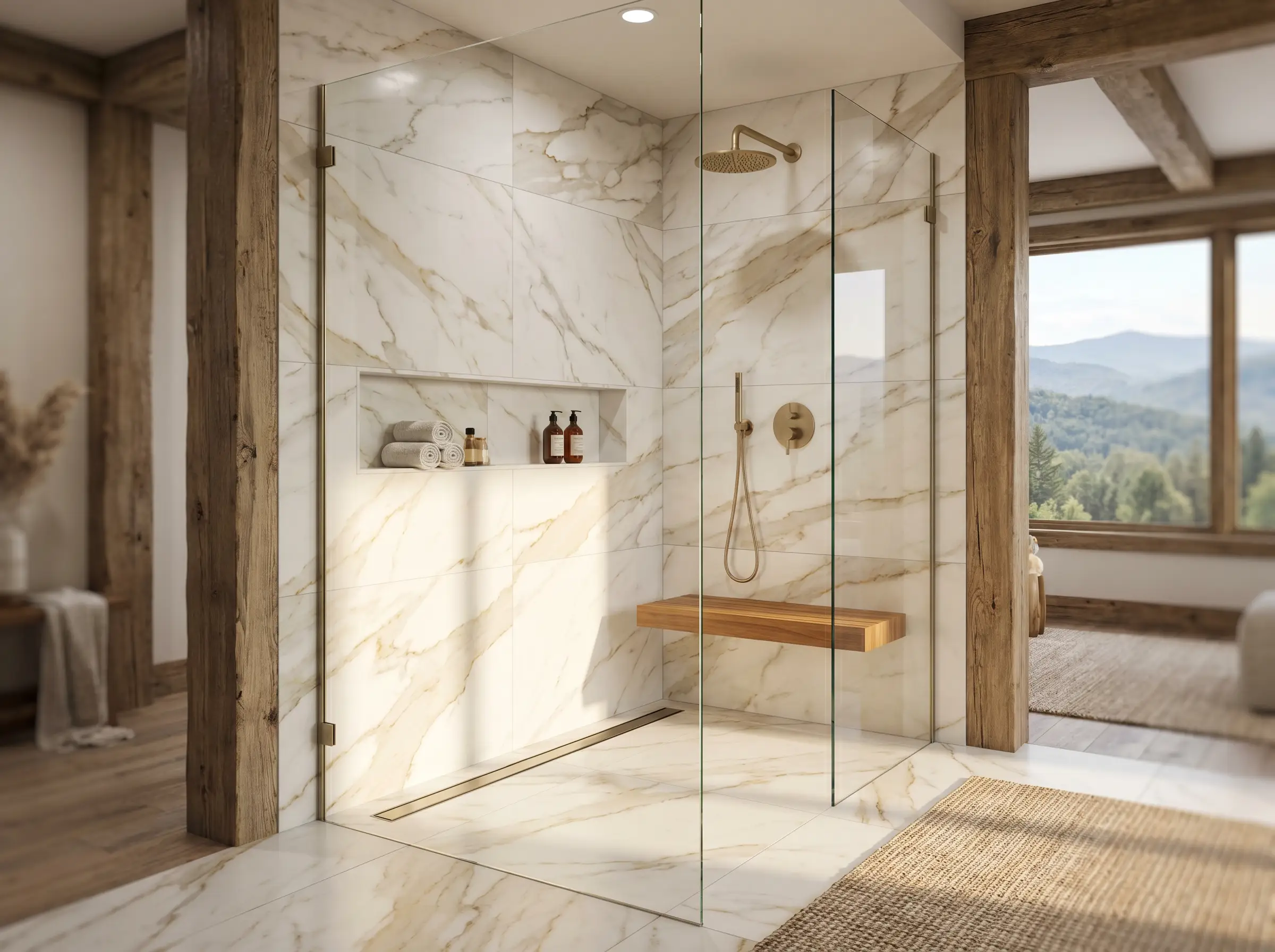
Walk-In Showers & Conversions
Prefab, custom tile, curbless & tub-to-shower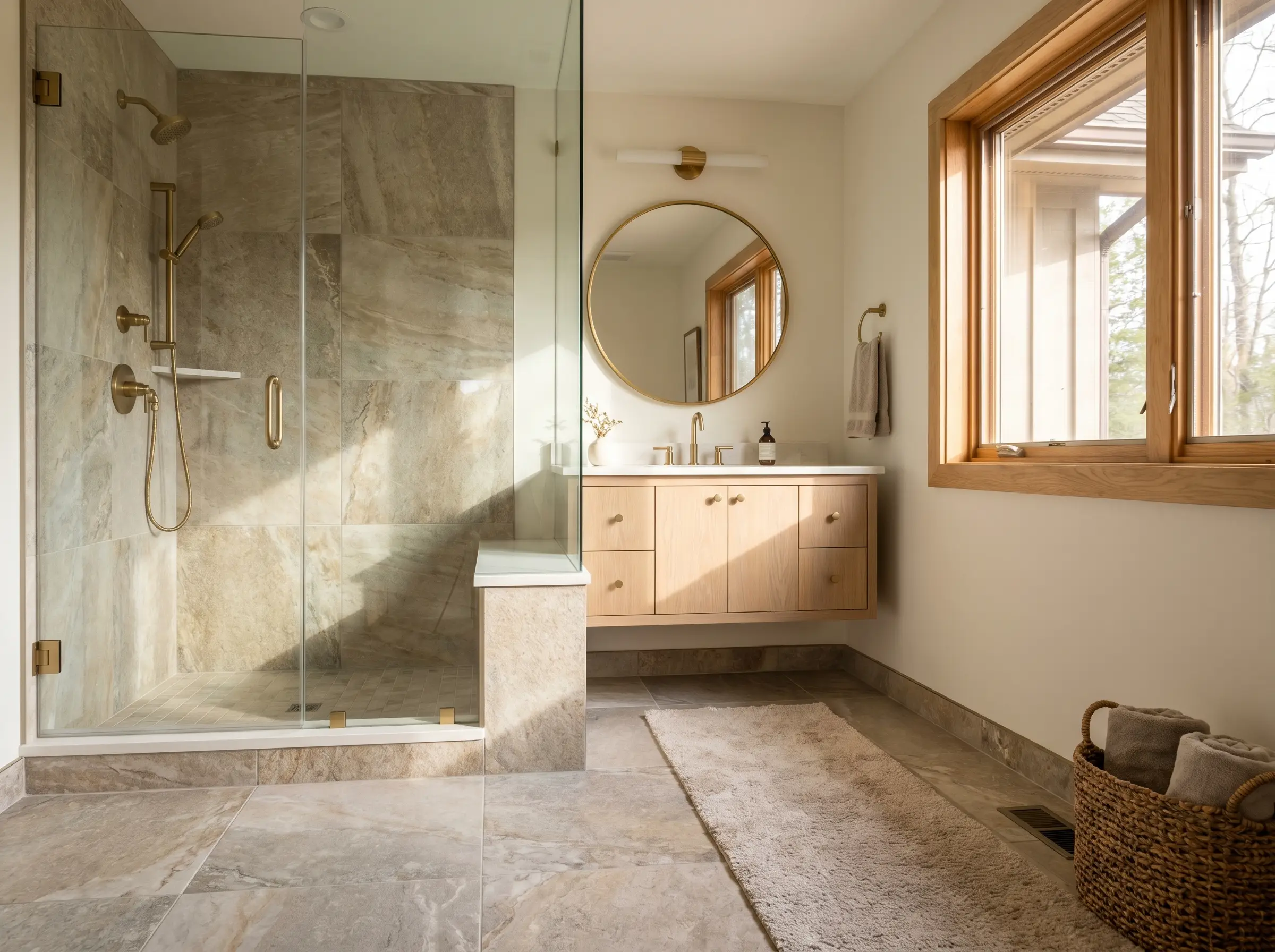
Bathroom Remodel Cost
By room size and finish tier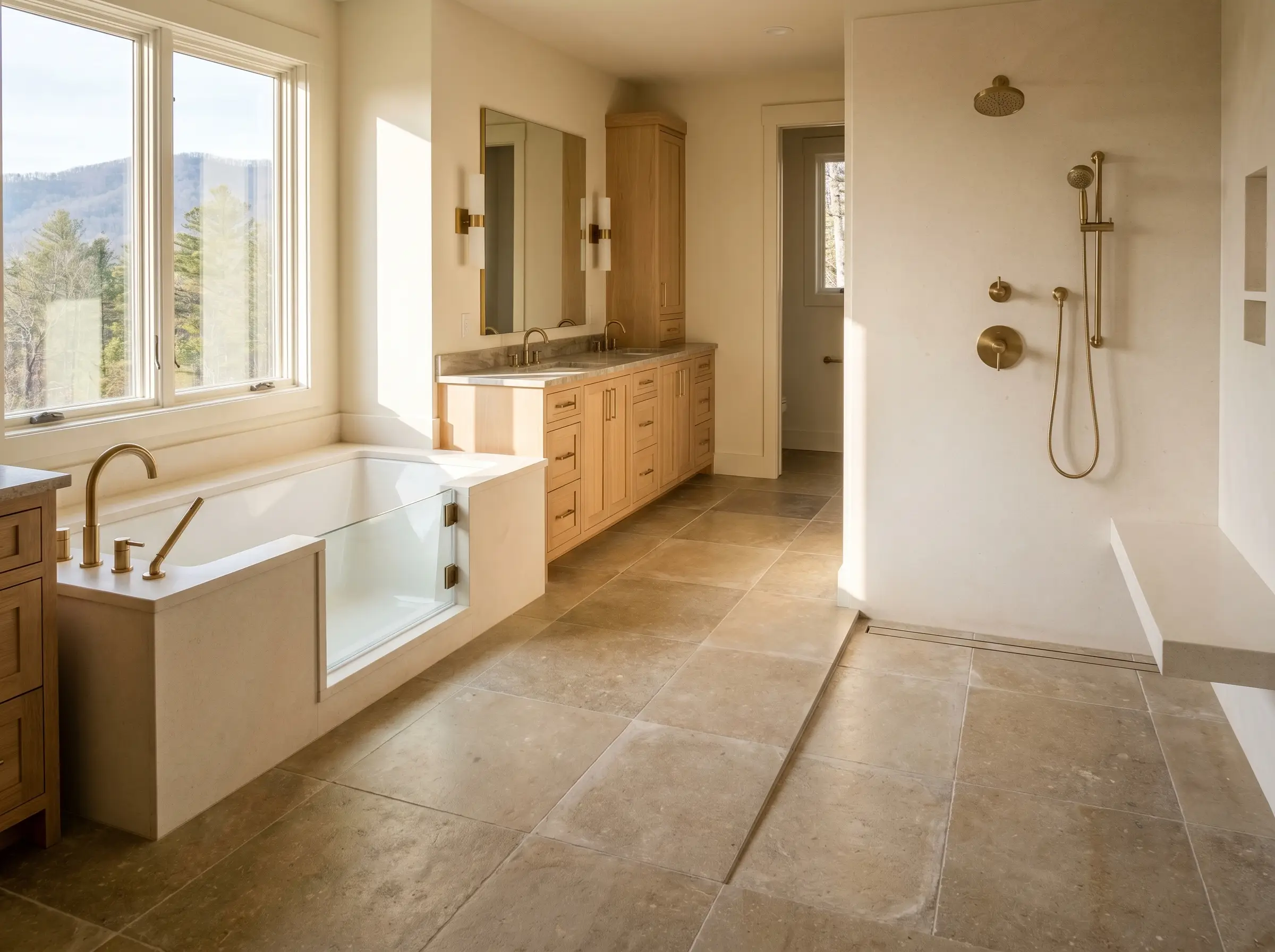
Walk-In Tubs & Accessible Baths
Curbless & aging-in-place scope
Kitchen Remodel Cost
Minor reface to upscale, by tierAsheville Bathroom Remodeling
What a local bathroom project includes
Get a Free Estimate
Trade your range for a real fixed priceGet a real WNC shower quote
These ranges are for planning. The only way to your number is a measured, line-item estimate — free, no obligation, fixed price up front.
Walk-in shower cost questions
How much does a walk-in shower cost in Western North Carolina?
Why does a curbless (zero-entry) shower cost more?
What's the cheapest walk-in shower option in WNC?
What drives the price of a custom-tile shower?
How long does a walk-in shower take to install?
Is a walk-in shower cheaper than keeping a tub?
Do I need a permit for a walk-in shower in WNC?
Is the quote you give the same as these published ranges?
Budget set? Let's price it.
Free in-home estimate. Licensed & insured. Real WNC cost data. No obligation.
Get a Free Estimate →