tub-to-shower conversion cost WNC
What a Western North Carolina tub-to-shower conversion really costs in 2026 — one-day acrylic versus full custom tile — and the three drivers that decide where your number lands.
One-day acrylic vs. custom tile
| Conversion method | What you get | Cost range |
|---|---|---|
| One-day acrylic liner system | Molded wall panels over the tub footprint, new base, stock colors — installs in ~1 day | $1,200 to $9,500 |
| Full custom-tile walk-in shower | Tub removed, waterproofed mortar pan, tiled walls, optional frameless glass — fully customizable | $3,500 to $15,000 |
| All conversions (combined range) | Small acrylic stall at the low end through full custom tile at the high end | $1,500 to $15,000 |
Source: HomeGuide — Tub to Shower Conversion Cost (2026) and HomeGuide / Angi — Tub to Shower Conversion Cost (2026). Ranges are published third-party figures, not Pisgah quotes; WNC labor runs modestly below large-metro national averages, so real local conversions tend toward the lower-to-middle of each band. Most WNC tub-to-shower conversions run $3,000-$8,000; a small acrylic stall is the low end, full custom tile the high end.
Accessibility add-onsAging-in-place add-ons
| Accessibility upgrade | What it adds | Cost range |
|---|---|---|
| Grab bars (each, installed) | ADA-rated bar anchored to in-wall blocking, not just drywall | $100 to $300 |
| Built-in bench or fold-down seat | Tiled bench or wall-mounted teak/phenolic seat | $200 to $1,000 |
| Curbless / zero-entry shower | Recessed subfloor so the shower drains with no lip to step over | $12,000 to $17,000 |
| Full universal-design bathroom | Zero-entry shower, accessible vanity, reinforced walls, grab bars | $30,000 to $50,000 |
Sources: Angi / This Old House — Walk-In Shower Cost (2026); 2024 Remodeling Cost vs. Value Report — South Atlantic (universal design). Grab-bar and seat figures are common installed published ranges for hardware set into proper blocking. A curbless (zero-entry) design adds 20-30% over a curbed shower because the subfloor must be recessed — figure a $3,000-$8,000 premium in WNC. Per the National Kitchen & Bath Association (NKBA), universal-design features are among the fastest-growing requests in bath remodeling.
A tub-to-shower conversion is one of the highest-impact, lowest-cost changes you can make to a Western North Carolina bathroom — but "tub-to-shower conversion" covers two very different projects with very different price tags. On one end is a one-day acrylic system that wraps your existing tub footprint in molded panels for $1,200 to $9,500. On the other is a full custom-tile walk-in shower that tears the tub out and rebuilds the space from the studs for $3,500 to $15,000. Across both methods, most WNC conversions land between $1,500 to $15,000, with a typical project near $5,000. Which method you choose, whether the plumbing moves, and which accessibility features you add are the three levers that decide where in that range you land.
The one-day acrylic method
A one-day system is exactly what it sounds like: the installer removes the tub (or leaves it and installs a liner over it), sets a new acrylic or fiberglass base, and snaps molded wall panels into place. Because there is no tile to set and nothing to cure, the work genuinely finishes in about 1 day, and the seams are factory-watertight. The trade-off is customization — you pick from stock colors and panel patterns, not a tile design you draw yourself. For a guest bath, a rental, or any homeowner who wants the tub gone fast and clean, the $1,200 to $9,500 price and one-day timeline are hard to beat. The low end near $1,200 assumes you reuse the existing drain in the same spot; relocating it pushes you up.
The custom-tile method
A custom-tile conversion is a real remodel. The crew removes the tub, frames the new shower opening, installs a waterproofed mortar shower pan, tiles the walls and floor, and often adds frameless glass — running $3,500 to $15,000. Here labor is 40-60% of the total because tile setting and waterproofing are slow, skilled trades, and the project runs 1 to 2 weeks since thinset, shower-pan mortar, and grout each have to cure before the next step. The payoff is total design freedom — any tile, any layout, a built-in niche or bench, large-format porcelain or a mosaic floor — and a result that reads as a true upgrade at resale. Tile material alone runs roughly $2-$15/sq ft, which is a meaningful part of the spread between a basic and a high-end custom shower.
Moving the plumbing is the hidden swing
The single decision that quietly moves your number most is whether the drain or supply lines have to relocate. A tub drain and a shower drain often sit in slightly different places, and the valve height changes when you switch from a tub spout to a shower head. If your installer can reuse the existing drain location, you stay near the floor of the range. The moment a plumber has to open the floor to move the drain or re-run lines, you add labor, a rough-in inspection, and calendar days — frequently $1,000-$3,000 on a conversion. This is why an honest contractor checks behind the wall before quoting: the same-looking conversion can differ by thousands based on what the plumbing requires.
Accessibility add-ons and aging in place
For many WNC homeowners, the real reason to convert a tub to a shower is safety — stepping over a tub wall is one of the most common bathroom fall hazards. The good news is that accessibility add-ons are modest line items on top of the conversion. Grab bars run $100-$300 each when anchored into proper in-wall blocking (never just screwed to drywall), a built-in or fold-down seat adds $200-$1,000, and anti-slip flooring is a small upcharge. The biggest accessibility upgrade is going curbless — a zero-entry shower with no lip to step over — which adds 20-30% (a $3,000-$8,000 premium) because the subfloor has to be recessed so water still drains. A complete universal-design bathroom built to aging-in-place standards runs near the South Atlantic benchmark of $40,750; you can read the full scope on our walk-in tubs & accessible bathrooms page.
Resale, permits, and the WNC adjustment
Two practical cautions before you commit. First, keep at least one bathtub in the house — buyers with young children look for a tub, so converting the home's only tub can shrink your future buyer pool; converting a second or rarely-used tub is the safe play. Second, if the work moves or adds plumbing, electrical, or walls, you will need a permit, and you want one, because the inspection protects you on the waterproofing you can't see after the walls close. Verify your county's threshold directly with Buncombe County Permits or Henderson County Building Services, and confirm any contractor's license is active through the NC Licensing Board for General Contractors — a free, two-minute check. WNC labor rates run modestly below large-metro national averages, which is why real Blue Ridge conversions tend to sit in the lower-to-middle of the published ranges above.
How to use these numbers
Start by deciding your method: one-day acrylic if speed and price lead, custom tile if design and resale lead. Then ask honestly whether your drain can stay put, and layer in any accessibility add-ons you need now or want to plan for. That path gets you a planning budget within a few thousand dollars of a real quote. From there, the only way to a firm number is a measured, line-item estimate — which we give free, with no obligation, across 24 WNC counties. For the bigger picture, our WNC bathroom remodel cost guide shows how a conversion fits a full-bath budget, and our walk-in showers & tub-to-shower page walks through how the work is actually built.
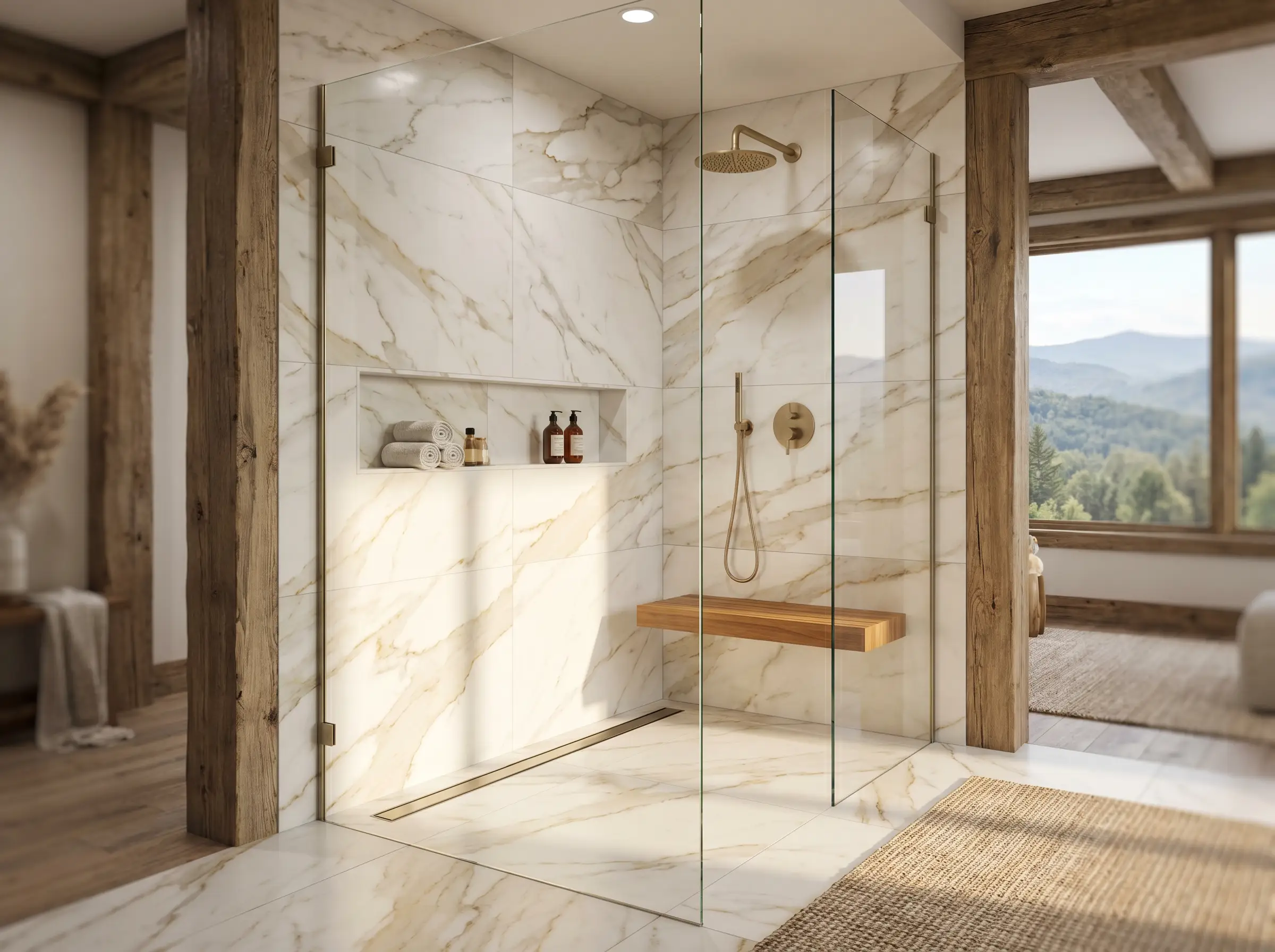
Walk-In Showers & Conversions
How prefab, tile & curbless work is built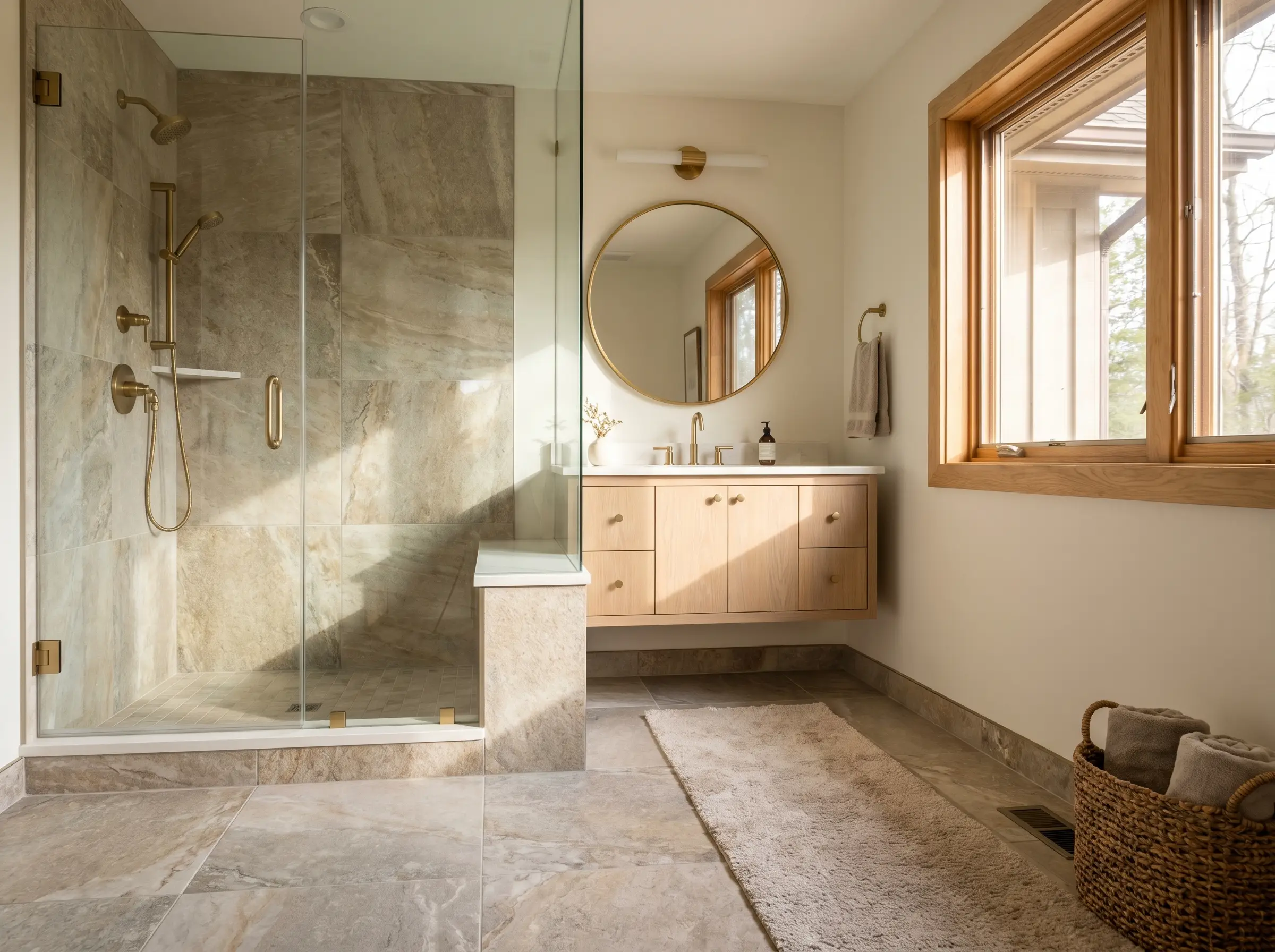
Bathroom Remodel Cost
Full-bath ranges by size & finish tier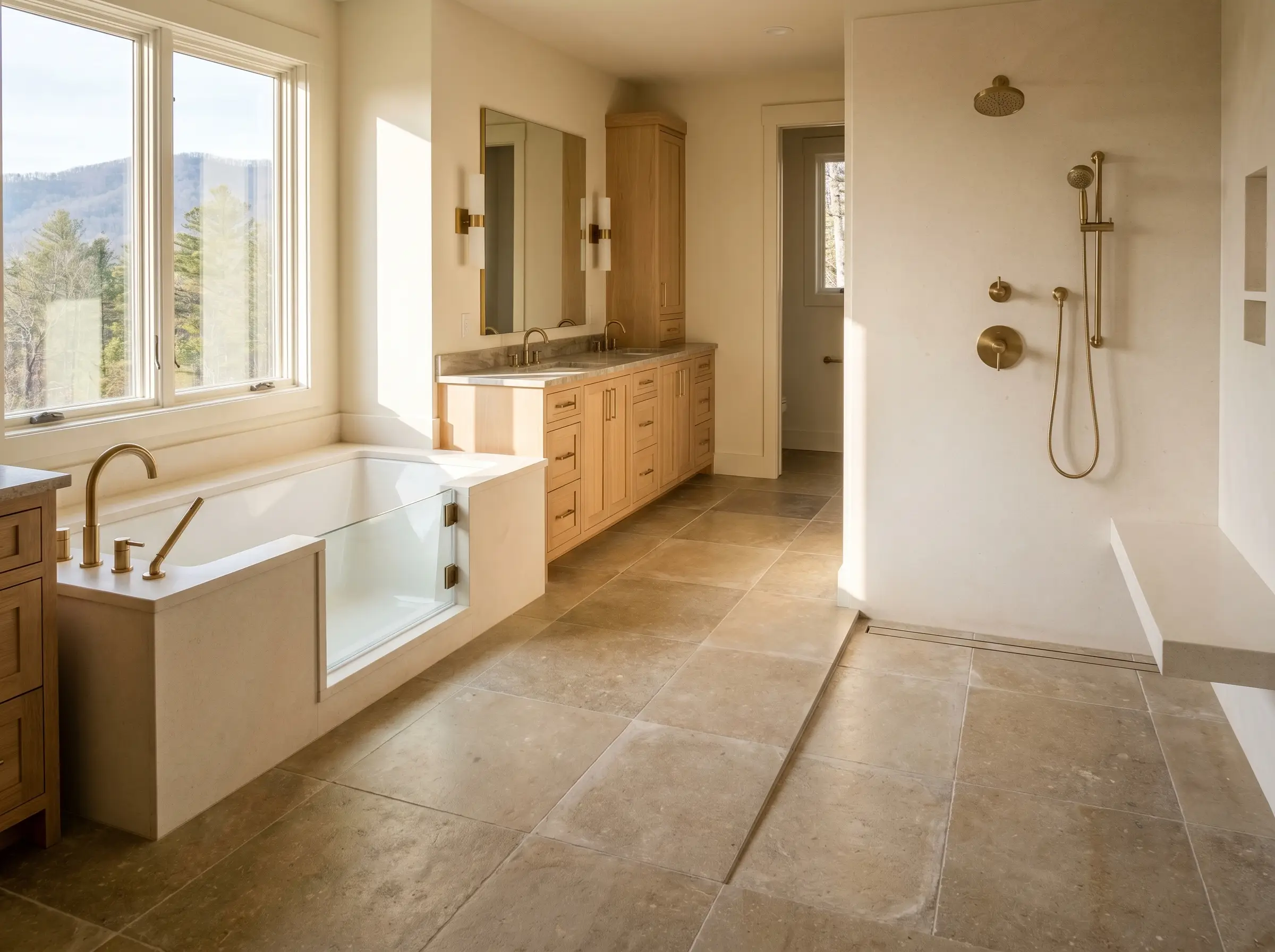
Walk-In Tubs & Accessible Baths
Aging-in-place scope & universal design
Kitchen Remodel Cost
Minor reface to upscale, by tierAsheville Bathroom Remodeling
What a local bathroom project includes
Get a Free Estimate
Trade your range for a real fixed priceGet a real conversion quote
These ranges are for planning. We price both the one-day and custom-tile methods side by side — free, no obligation, fixed price up front.
Tub-to-shower conversion questions
How much does a tub-to-shower conversion cost in Western North Carolina?
What's the difference between a one-day conversion and a custom-tile shower?
Does a tub-to-shower conversion really only take one day?
Will converting a tub to a shower hurt my home's resale value?
What accessibility add-ons can I include, and what do they cost?
Do I need a permit for a tub-to-shower conversion in WNC?
What's the cheapest way to convert a tub to a shower?
Is the number you quote the same as these published ranges?
Tub gone? Let's price the shower.
Free in-home estimate. Licensed & insured. Real WNC cost data. No obligation.
Get a Free Estimate →